欢场春梦
용산공원·서울 그린벨트, 7만3000가구 추가 공공택지서 빠진다…"경기 중심 유력"_我的网站

一 |
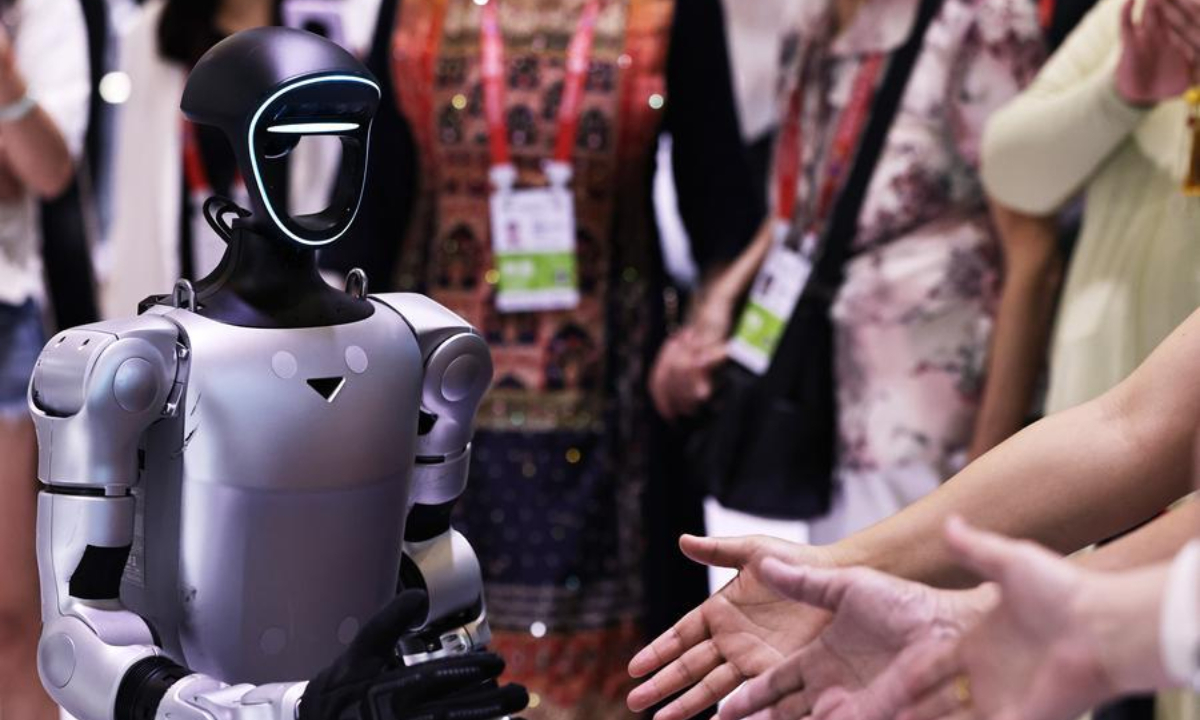
China's high-tech exports surged over 50 percent year on year in July, well ahead of the 17.8-percent growth in total exports, customs data showed. The export gains are being mirrored in investment flows, with foreign funds moving into Chinese technology stocks and global indices adding newly listed hard-tech companies.
Rob Subbaraman, head of global macro research and co-head of global markets research at Nomura, said China's low-cost and abundant electricity supply, growing talent pool and early lead in physical AI are driving the rapid development of its AI industry chain.
China's development of open-weight models could accelerate their adoption by businesses, allowing productivity gains from AI as a general-purpose technology to spread more quickly across the economy, he said, citing models from Chinese firms including DeepSeek and Moonshot AI.
"The lower cost of these models was another advantage," he said, adding that the benefits could extend beyond China, particularly to emerging markets that could adopt cheaper Chinese AI models.
China's strength in advanced manufacturing has also become increasingly evident, said Robin Xing, chief China economist at Morgan Stanley, pointing to China's roughly half share of global installed new energy storage capacity and the rapid growth in outbound licensing deals for innovative drugs. These trends, he said, underpin the long-term investment case for China's hard-tech sector and leading manufacturers.
These strengths are increasingly being reflected in foreign investors' allocation decisions. This year, Goldman Sachs has twice raised its 12-month target for the CSI 300 on improving earnings momentum, and retained an overweight view on Chinese equities.
Kinger Lau, chief China equity strategist for Goldman Sachs Research, said the bank's positive view reflected improving earnings momentum, favorable macroeconomic and liquidity conditions. A-share equities offered international investors diversification benefits that remained underappreciated, along with attractive exposure to hard-tech and AI themes, he added.
Individual companies are drawing overseas interest too.
ChangXin Memory Technologies surged 465.82 percent on its debut on Shanghai's STAR Market last month, reaching a market capitalization of more than 3.2 trillion yuan (about 471.28 billion U.S. dollars).
U.S.-based Tema ETFs made the chipmaker a top holding at a 10.56 percent weight on its debut day, while MSCI officially added it to its China All Shares Index on Monday under a fast-track rule for large IPOs.
Robotics is where the enthusiasm is most visible. Unitree, set to become China's first mainland-listed humanoid robot maker, priced its Shanghai IPO at 150.8 yuan a share, representing 10 percent of its post-offering share capital. The offering is expected to raise about 6.1 billion yuan in gross proceeds.
That optimism, however, exists alongside broader economic pressures. Nathan Chow, senior economist at DBS Bank, said the imbalance between relatively strong supply and weak demand remained pronounced, with household consumption and some companies' profitability still under pressure.
Investment in infrastructure could help offset the weakness in private investment in the near term, while lowering logistics and energy costs and improving the efficiency of resource allocation over the longer term, Chow said. It could also strengthen supply chains and reduce the economy's exposure to external shocks and geopolitical risks, he added.
The implementation of policy measures would be key to sustaining the recovery in the second half of this year, analysts noted.
Economic management requires both easing the brakes and stepping on the accelerator, said Song Yu, chief China economist at UBS Securities, adding that faster fiscal spending and the use of bond proceeds, additional policy support and better coordination between fiscal and financial policies are needed, alongside measures to remove barriers to household consumption and improve the business environment.
"With stronger policy support and measures taking effect, China's economy is expected to maintain a steady recovery in the second half of the year," Chow said.
。 국토부, 내곡동·올림픽선수촌 인근 등 서울 그린벨트 제외 공식화 ▲ 김윤덕 국토교통부 장관이 26일 서울 모처의 한 식당에서 용산공원을 활용한 주택 공급 등 서울 주택 문제를 오세훈 서울시장과 협의하기 위해 이동하고 있다. 연합뉴스정부가 이르면 9월 말 내놓을 추가 신규 공공주택지구에 용산공원과 서울 개발제한구역(그린벨트)은 포함되지 않을 전망이다.김윤덕 국토교통부 장관은 26일 오세훈 서울시장과의 면담을 앞두고 취재진과 만나 추가 택지에 용산이 들어가는지 묻는 질문에 "원래 용산은 들어가지 않았다"고 선을 그었다. 추가 물량인 7만3000가구가 경기도 부지로만 채워질 가능성에 대해서는 구체적 언급을 피하며 "천천히 기다려보자는 것"이라고 답했다.앞서 정부는 8·13 대책을 통해 서울 강서, 경기 남양주, 경기 광주 등 3개 지역에 신규 택지를 조성해 2030년까지 2만7000가구를 착공하겠다고 발표한 바 있다. 여기에 더해 '7만3000가구+α' 규모의 추가 택지도 행정절차를 거쳐 이르면 9월 말 공개하겠다고 밝혔다.추가 택지 후보로는 그동안 △서초구 내곡동 예비군훈련장 △강남구 세곡·자곡동 △수서차량기지 △송파구 방이동 올림픽선수촌 인근 등 서울 내 그린벨트가 거론돼왔다. 하지만 서울시가 그린벨트 해제를 통한 주택 공급에 강하게 반대해온 만큼 실제 반영 여부는 불투명하다는 관측이 많았다.용산 어린이정원 등 용산공원 본체 부지를 주택 용지로 활용하는 방안 역시 정부 내부에서 검토돼왔으나, 서울시의 반대에 부딪힌 상태다.이런 분위기 속에 이번 추가 택지는 경기도 위주로 짜일 가능성이 커지고 있다. 국토부 관계자는 김 장관의 발언에 대해 "7만3000가구에 서울이 들어가지 않는다고 장관이 확정적으로 말씀하신 것"이라고 설명했다. #7만3000가구 #용산공원 #그린벨트 #공공택지 #경기도。
Current article:http://7o1.bomanglangsugangunxileba.cyou/news/20260826_85431.html
Published on:05:30:50


